Category: Category 1

Use this description to tell users what kind of blog posts they can find in this category.

  • 🚨WARNING🚨 CNN’s Toobin Admits Radical Judges Posted To Stop Trump, “Destroy Constitution”.

    🚨WARNING🚨 CNN’s Toobin Admits Radical Judges Posted To Stop Trump, “Destroy Constitution”.

    Col. Michael Clark w/TCO Intelligence Group

    CNN legal analyst Jeffrey Toobin has never been one to show good judgement. When he’s not getting caught conducting “personal business” on a staff Zoom call, he’s accidentally admitting that there’s an ongoing leftist-led judicial coup designed to stymie President Trump’s agenda.

    The serial self-pleasurer let the proverbial cat out of the bag in his Monday opinion column for The New York Times. Titled, “The Plan for a Radically Different Supreme Court Is Here,” the article purports to roll out a blueprint for countering conservative appointments of originalist judges to the bench but inadvertently discloses the existence of leftists’ efforts to weaponize the judicial system against Trump.

        The admission comes in the piece’s opening paragraphs, in which Toobin discusses the American Constitution Society and its new president, Phil Brest. The ACS has often been described as the less successful and left-wing alternative to the conservative Federalist Society, which has become an influential force in getting originalists appointed to the Supreme Court and other federal judgeships.
    legislative and executive branches under Republican control, leftists have turned to their last available option: the lower courts.

    As admitted by Toobin, Democrat-appointed district judges have become a critical feature of the left’s evolving lawfare against Trump and those who support him. In response to leftist-backed lawsuits, these judges have spent the past year issuing overreaching injunctions and temporary restraining orders blocking every aspect of the president’s agenda — with some even going as far as attempting to unilaterally halt enactment of policies passed by Congress.

    While the Supreme Court has limited some of these actions, loopholes in the high court’s 2025 ruling on lower courts’ abuse of nationwide injunctions have continued to be exploited by rogue judges. The GOP Congress and Trump have also declined to take necessary action to stop this weaponization of the judicial system.

        The Times and Toobin may think the latter’s article is shining a light on a new and exciting counter to the successful originalist movement. In reality, it’s just further affirmation of the left’s willingness to wreck America’s constitutional system in their quest for unfettered power.

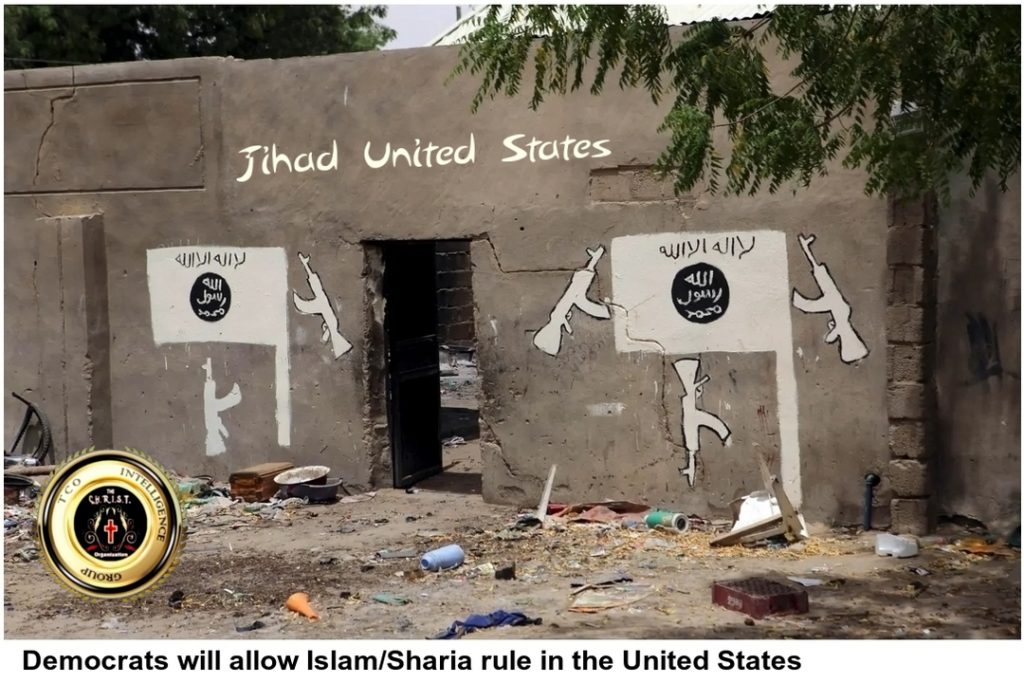
  • REPORT: Democrats Would Likely Hand US To Islam/Sharia Rule

    Islamic terrorism remains a persistent and dynamic threat to the United States, according to U.S. government agencies and national security experts. This threat manifests in various forms, including inspiration for “lone wolf” attacks, online radicalization, and the ongoing activities of foreign terrorist organizations.

    Nature of the Threat

    • Inspiration vs. Direction: Since the territorial defeat of the Islamic State (ISIS) caliphate, attacks in the U.S. are more likely to be inspired by, rather than directly orchestrated by, international groups. Organizations like ISIS and Al-Qaeda use online propaganda to encourage sympathizers to carry out attacks wherever they are located.
    • Homegrown Violent Extremists: The majority of individuals involved in jihadist terrorism-related crimes in the U.S. since 9/11 have been American citizens or legal residents who radicalized domestically.
    • Foreign Terrorist Organizations (FTOs): Designated FTOs like al-Qaeda, ISIS, Hamas, and Lebanese Hizballah continue to pose a threat, focusing on both U.S. interests abroad and potentially targeting the homeland. State sponsors of terror, such as Iran, also present a heightened threat environment, with the potential for cyberattacks and plots against U.S. officials or critics.
    • Targeting: Terrorists associated with this ideology pose a danger to civilians, as well as military and law enforcement personnel.

    Current Assessment

    U.S. authorities, including the Department of Homeland Security (DHS) and the FBI, actively monitor and work to disrupt plots from both foreign and domestic sources. The threat landscape has evolved from large, coordinated conspiracies to a focus on lone offenders who are harder to detect.

    While the frequency and average lethality of jihadist attacks in the U.S. have fluctuated over the years, the potential for mass-casualty events necessitates continued counterterrorism efforts. The ongoing conflicts in the Middle East, such as the Israel-Iran conflict, are noted by DHS as factors that could increase the likelihood of U.S.-based individuals plotting attacks.

    The U.S. government emphasizes a comprehensive approach to counter all forms of violent extremism, acknowledging that threats come from various ideologies, including both Islamic extremism and domestic far-right extremism.

    The presence and influence of Sharia law in the United States is a topic of concern for some, particularly in communities with significant Muslim populations. Sharia, derived from the Quran and Hadith, is a comprehensive legal and moral framework guiding many aspects of life for practicing Muslims. It is important to understand that the interpretation and application of Sharia can vary widely among Muslim communities.

    In the United States, the legal system is based on the Constitution, which guarantees religious freedom while maintaining a clear separation between religion and state law. While some Muslim communities may follow certain personal or religious practices inspired by Sharia, these practices do not override U.S. law. The American legal system does not recognize any religious law as superior to constitutional law.

    The concept of Sharia as a universal and binding legal code that conflicts with the U.S. Constitution and Western values is often debated. Many Muslim Americans integrate their faith with their commitment to U.S. laws and norms, finding ways to practice their religion within the framework of American society.

    It is essential to approach this subject with nuance and avoid broad generalizations. Understanding the diversity within Muslim communities and the distinctions between religious beliefs and legal obligations helps foster informed and respectful dialogue about the role of Sharia and its place in American society.

  • 1500% Increase In Threats Against Politicians

    Lawmakers Receiving Millions in Additional Security Funding Due to Threats on Their Lives

    This development underscores the growing need for robust security protocols in the face of escalating risks to public officials.

    A potentrial government shutdown deal includes significant funding for lawmakers’ security, with an additional $203.5 million allocated for enhanced security initiatives for members of Congress. This funding boost is in response to an increase in threats and is part of a broader legislative package that also includes funding for the U.S. Capitol Police and provisions for reversing some federal worker layoffs. The bill aims to fund the legislative branch for the full fiscal year, alongside a continuing resolution for other agencies. 

    Key security provisions in the deal;

    Enhanced Member Security: $203.5 million is allocated for “enhanced member security initiatives”.

    Office Security Funding: An additional $750,000 is provided to each senator’s office account for security enhancements and services at their residences.

    Coordinated Security: $5 million is set aside for the Senate sergeant-at-arms to coordinate security with state and local law enforcement.

    Capitol Police Funding: The package includes $852 million for the U.S. Capitol Police.

    Transparency: The House sergeant-at-arms will be required to provide a briefing on new security programs and expenditures within 30 days of the measure’s passage. 

    Context of the deal

    Reason for security increase: The increased funding for security is a direct response to the rise in political violence against elected officials.

    Bipartisan agreement: The deal was negotiated between Republican and Democratic senators, with some moderate Democrats helping to advance the bill.

    Legislative action: The legislative branch funding bill is a key component of a larger package to end the government shutdown.

    Other provisions: The broader deal also aims to fund the Government Accountability Office, reverse some federal worker layoffs caused by the shutdown, and provide funding for veterans and military construction. 


    In the last year (2024), the United States Capitol Police investigated 9,474 threats against members of Congress and their families, a significant increase from the 8,008 threats in 2023. While the specific number for all politicians is not available, these figures show a high volume of threats against federal lawmakers, and data from organizations like the Brennan Center for Justice indicates that state and local officials also experience threats at high rates.